Hybrid presentation by Legae Academy Physics Teachers and Students - Thursday 27th November 2025 at 6:15PM Find out more
Events & Meetings
Live presentation by Legae Academy and students & teachers
Title: How the Universe Revealed its Secrets
Presented by students: Raza Hasan, Keto Mokopi, Makanakaishe Muzonzini and Dylan Dsouza Presented by teachers: Mr. OJ Setlang and Mr. T. Charamba
Abstract:
For centuries, humans have looked up to the skies not only for wonder but for answers. Explore how natural cosmic events, from the movement of planets and solar eclipses to supernova explosions and cosmic radiation, have allowed scientists to uncover the mysteries behind nature's laws. Through these revelations, we see that the universe itself has been our greatest teacher. Each discovery, not made by invention but by observation, shaped modern physics and our understanding of space, time, and existence. A journey through the moments when nature spoke and humanity learned to listen.
Live presentation by Legae Academy and students & teachers Q&A Session
Night Skies of December 2025 with Harold Hester
Night Skies of November 2025 with Harold Hester
Black holes are not just astrophysical objects — they are gateways into the strange geometry of spacetime itself.
In this talk, On the Other Side of Infinity, we’ll journey from the basics of light cones and causality to the surreal cartography of Penrose diagrams, which fold the infinite into something we can sketch on a page.
Gamma Ray Bursts: Death Cries of the Distant Cosmos
Gamma-ray bursts (GRBs) are the most energetic events in our cosmos, yet they remain largely unknown to thoseoutside the field of astronomy. What mechanisms drive these powerful explosions? From the deaths of massive stars to the awe-inspiring flashes that light up the entire electromagnetic spectrum, second only in scale to the Big Bang.
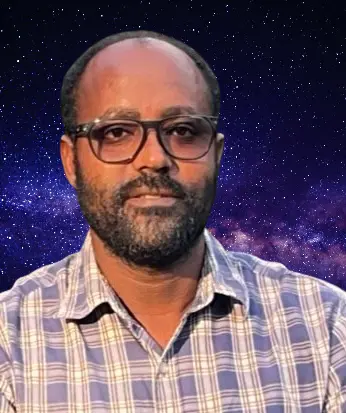
Building a Bright Future: AfAS and the Growth of Astronomy Across the Continent
by Prof. Abebe Amare
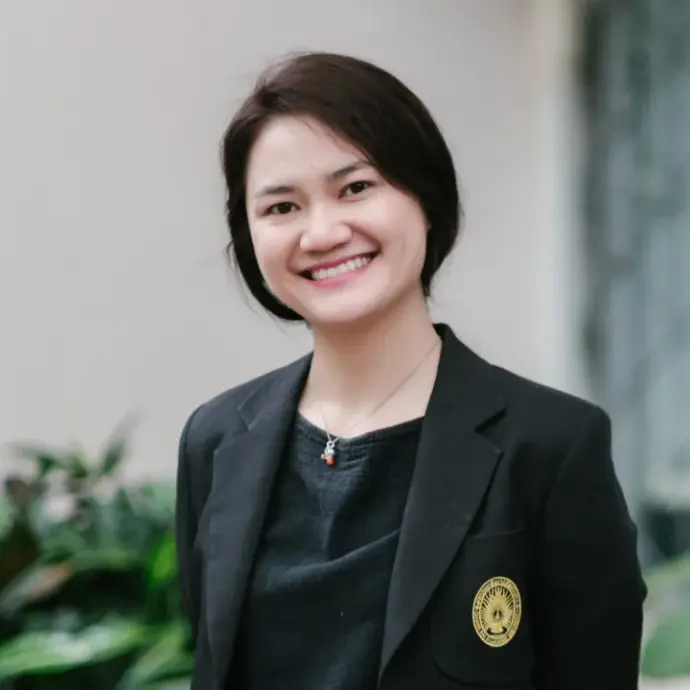
Dark skies in Thailand: the current situation and how it relates to healthcare, tourism and agriculture
by Dr. Farung Surina
Abstract
Thailand’s night skies are rapidly changing under the growing impact of artificial light at night (ALAN). We present the first high-resolution dark sky map of Thailand, based on calibrated zenith night sky brightness data from 2012–2023, revealing significant trends and implications for public health, tourism, and agriculture. Comparative analyses with the UK, Chile, and Botswana highlight that Thailand has been losing pristine night skies at a high rate—15.4% since 2012—while many of its remaining dark sky areas are at risk of disappearing by 2068 without active conservation. In 2023, nearly 60% of Thai residents had already lost the ability to see the Milky Way, and about 20% were exposed to light levels high enough to prevent full dark adaptation of the human eye, raising concerns for both circadian health and sleep quality.Beyond astronomy, ALAN is now recognised for its broader ecological and economic consequences. By integrating satellite-derived sky brightness data with national datasets on rice paddy fields and road networks, we quantified the impact of light pollution on agriculture. Our models estimate that up to 19% of rice fields lie within zones of photoperiod-disruptive illumination, potentially reducing yields and causing annual economic losses exceeding 100 billion Baht. We propose the creation of “Dark Sky Agricultural Zones” and promote dark sky preservation not only to protect natural heritage and boost astro-tourism, but also to support sustainable rural livelihoods and human wellbeing. This interdisciplinary approach demonstrates how astronomical tools can inform public policy across health, environmental, and economic sectors.
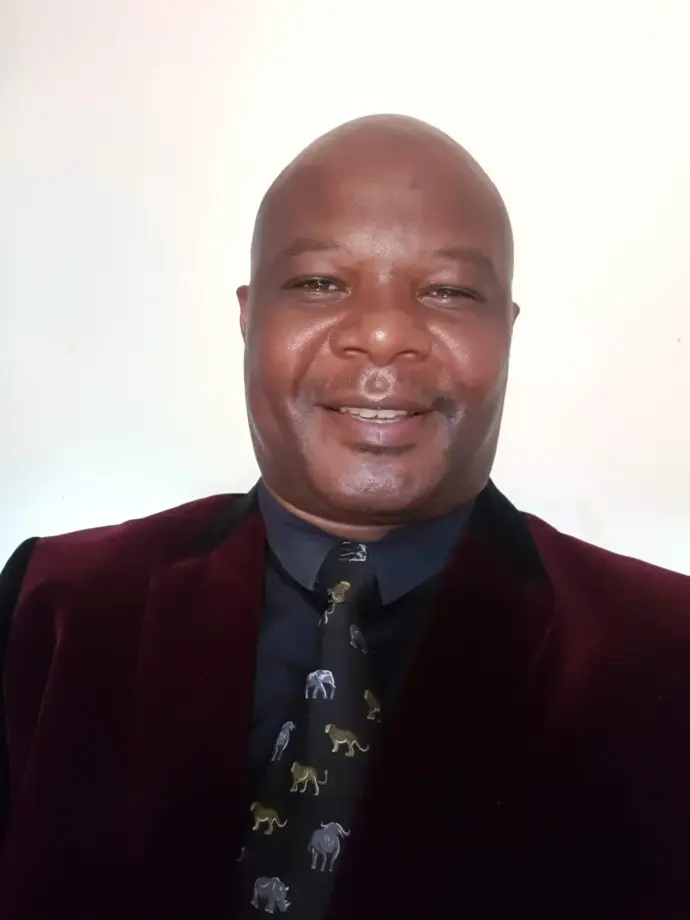
Dinaledi: Tswana-ethnoastronomy
by Moletlanyi Tshipa
Abstract
The talk journeys through the philosophical and mystical skies of the Batswana, where stars were not merely distant embers, but sacred beads strung across the heavens. Every constellation was a verse in a celestial folktale, a whisper from the ancestors, guiding the living through the rhythms of night and season — they were storytellers, timekeepers, and guides. Bathed in myth and meaning, stars whispered the hours and pointed the way through the velvet night, dinaledi tsa tsela, serving the Motswana as both calendar and compass since the days of Lowe.
Biography
Moletlanyi Tshipa earned both his MSc and PhD in Theoretical Physics from the University of Botswana in 2008 and 2018 respectively. He served as a teaching assistant from 2004-2005, and as a demonstrator from 2005-2009, in the University of Botswana. He then continued to serve as a lecturer from 2009 to 2022, and as a senior lecturer from 2022 to present, in the same university. A theoretical physicist, his research interests include Quantum Mechanics, Particle Physics, String theory, M-theory, Quantum Computing, Quantum Gravity, Quantum Finance, Quantum Biology, Cosmology and Special and General Relativity. Some of his contributions are his Photonology theory (which suggests that physical matter consists of light) and his Semi-relativistic quantum mechanical wave equations. He is a reviewer for a number of journals including Expert Opinion on Astronomy and Astrophysics, Characterization and Application of Nanomaterials and Physical Science & Biophysics Journal (PSBJ). He has also been a member of the Astronomical Society of Botswana from its inception.
Impossible Galaxies, the Hubble Tension and the Ricci Solution
GEOLOGY OF VENUS
by Professor Motsoptse Modisi
Presenter’s Profile
Professor Motsoptse Modisi is currently Visiting Professor of Geology at the Botswana International University of Science and Technology (BIUST). He obtained a PhD in structural geology in 1994 from McMaster University. He has instructed and researched on topics including tectonics, regional geology, field geology as well as structural geology at the University of Botswana (UB) between 1985 and 2018. Before joining UB, Prof Modisi began his career with the then Department of Geological Survey, now the Botswana Geoscience Institute (BGI) from 1976 to 1985. He also serves in the Board of Directors of BGI. He is a member of the Botswana Geoscientists Association, the Botswana Academy of Science and the Astronomical Society of Botswana. AbstractVenus can be identified in the night sky without the aid of an optical instrument. It is the third brightest object after the Sun and the Moon. It is commonly known as a morning “star” when it appears in the eastern dawn sky, or an evening “star” when it appears in the western dusk sky. It is currently not visible as it is at inferior Solar conjunction as it transitions from evening to morning “star”. When visible, It can easily be viewed through binoculars or low-powered armature telescope. It displays phases like those of the Moon. The four inner terrestrial planets: Mercury, Venus, Earth and Mars each have a rocky outer composition and a metallic core. Knowledge of the geology of Venus has been enriched by information and data gathered by Earth-based and space-based telescopes. More details have been added by fly-by spacecraft, orbiting satellites and landers. Venus morphological features include impact craters, volcanic domes and craters and chasma. The gross global tectonic model is significantly different from that of Earth, especially on the aspect of plate tectonics. Extensive volcanic resurfacing is quite evident. The venetian atmosphere probably allows for wind-produced sedimentary deposits.
Is There Anybody Out There?
by Mike Bode
The greatest question science can address is “does life exist beyond the Earth?” Even more crucially perhaps, are we the only intelligent beings in the Universe? So far, we cannot give definitive answers to either question, but we can at least try to estimate how many civilisations capable of interstellar communication, other than our own, might currently exist in our Galaxy, the Milky Way.
In this talk, inspired by a recent article by Professor Doug Whittet of Rensselaer Polytechnic Institute, USA (“Astronomy, Society and Sustainability: How we can Help Save the Planet”, Astronomy and Geophysics, December 2024), I will consider the factors that are used to do the estimation and end up with an answer (or two!). These 7 factors range from the rate of formation of stars in the Milky Way to the longevity of a civilisation, such as our own, capable of interstellar contact. The latter entails a detailed look at the threats to our existence, both natural and artificial, and their possible mitigation. Some of the results surprised me, and I hope they will surprise, and even inspire, you as well.
by Omogolo Aron Keobokile
Southern Africa is home to several significant impact craters, which offer valuable insights into the region’s geological history and the broader processes of Earth’s evolution. This study focuses on the geological significance of impact craters, such as the Vredefort and Morokweng craters, and their roles in advancing our understanding of the Earth’s geological history. These craters provide valuable data for dating geological events, studying shock metamorphism, and exploring mineral deposits. The study also examines the economic potential of these craters, as they are often rich in minerals and ores, contributing to regional economic activities. Additionally, the cultural and historical narratives associated with these craters highlight their importance beyond the scientific community, emphasizing their value in both educational and tourism contexts. By examining the geological data and environmental studies, this research underscores the comprehensive significance of crater formations in Southern Africa, bridging the gap between geological science and environmental impact assessment.
BOTSAT-1: Botswana’s Journey to Space and Beyond
by Dr. Dimane Mpoeleng, BOTSAT Project Lead at BIUST, Palapye, Botswana
Introduction to the Night Skies of December & the Andromeda Galaxy
by Harold Hester
Introduction to the night skies of October and the influence of sunspots on Earth
by Harold Hester
Astronomy: from Ancient Starlight to a Bright Future for Botswana
by Legae & Maru-A-Pula Astronomy and Space Clubs
Astronomy, one of humanity’s oldest sciences, began with our ancestors gazing at the night sky, marvelling at the stars, and crafting stories about the cosmos. Over centuries, this fascination evolved into a sophisticated science that now employs powerful telescopes and advanced machinery to explore the universe. This presentation traces the evolution of astronomy from its humble beginnings to its current state as a high-tech field that not only expands our understanding of the cosmos but also drives technological and scientific advancements across various disciplines, including medicine.
Botswana, with its clear skies and minimal light pollution, stands on the cusp of becoming a significant player in the global astronomical community. We will delve into the achievements and future potential of astronomy in Botswana, highlighting the role of institutions like the Botswana International University of Science and Technology (BIUST) in fostering this growth. Moreover, we will explore the importance of nurturing a scientific mindset in young minds, emphasizing the value of imagination and critical thinking in scientific discovery and innovation.
By cultivating an interest in Astronomy and research science among Botswana’s youth, we can inspire the next generation of scientists, researchers, and explorers. This presentation aims to ignite curiosity, celebrate the beauty of the night sky, and demonstrate how fostering a passion for astronomy can lead to remarkable scientific progress and inspire future pioneers.
by Dr. S Poshyachinda
The establishment of the National Astronomical Research Institute of Thailand (NARIT) in 2009 laid a solid foundation for the development of Astronomy in Thailand.
Searching for the Evidence of Cosmic Inflation
by Dr. Rhodri Evans
Time, the Common Denominator between Astronomy, Geology and History
by Harold Hester
Abstract
The presentation will be a light-hearted attempt to show that what appears static is amazingly dynamic, both in the heavens and on earth. It will also try to show that “a long time ago” has different meanings and that the natural universe is all-powerful.
Biography
I was born a long time ago, so I am very old. My first love was cricket until I met my future wife who inspired me to learn more about the night sky. I am still learning and trying to be passionate about anything I tackle. My other passion is birding and since that and looking at the stars require me to look upwards, I have a constant crick in my neck. I try to keep up with technology, but that is becoming more and more difficult. I am in awe of what Galileo and Shakespeare achieved and several others who followed them.
The Search for Life in the Solar System
by Dr. Roberto Orosei
Abstract
The search for life outside our planet addresses some of the most fundamental questions on the origin and destiny of humanity, and has become one of the principal themes in the scientific exploration of space.
Most past and current Solar System missions have focused on the search for potential habitats, that is of environments conceivably capable of sustaining at least one known lifeform. Thought to have possessed a warmer climate and liquid water on its surface up to perhaps 3.5 billion years ago, Mars has become the main target of space exploration for the search of life.
In the first two billion years of its existence, Venus is thought to have had a warm climate and oceans, which were subsequently lost due to runaway greenhouse effect as the Sun gradually increased its luminosity. Plumes of water vapour erupting from Saturn’s moon Enceladus, and originating from a global water ocean beneath its ice crust, have been found to contain complex macromolecular organic material.
One of the Galilean moons of Jupiter, Europa, similarly possesses a global ocean beneath an ice crust several kilometres thick. Liquid water is thought to be currently present also beneath the surface of Titan, Ganymede and Callisto, and suspected to exist on Ceres and Pluto.
The focus of the presentation will be on habitability, that is on the conditions that would allow a known biological species to survive.
In general, I will provide a comparison with the environments on Earth that are most similar to those found elsewhere in the Solar System, and a brief description of the kind of terrestrial organisms that live in such environments.
The Night Skies in December 2023
by Harold Hester
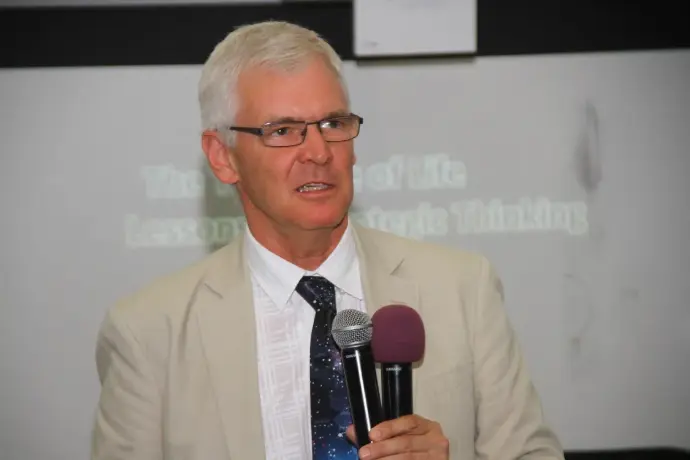
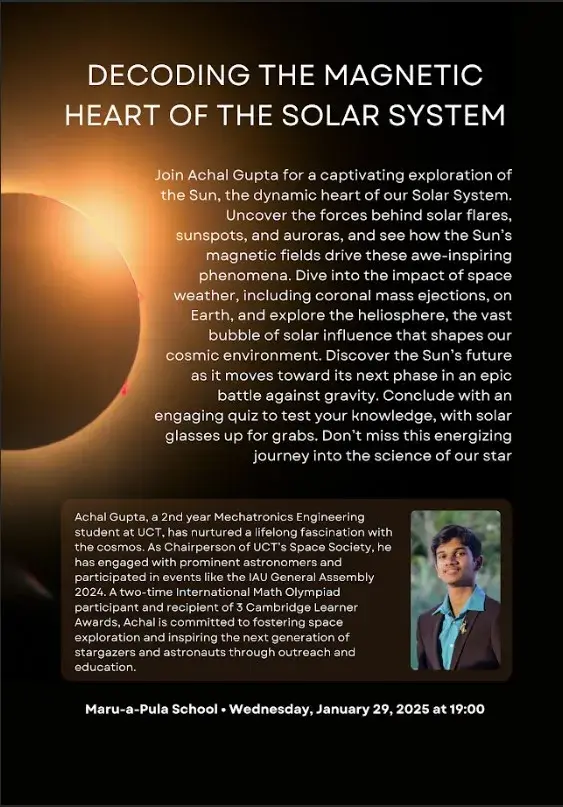
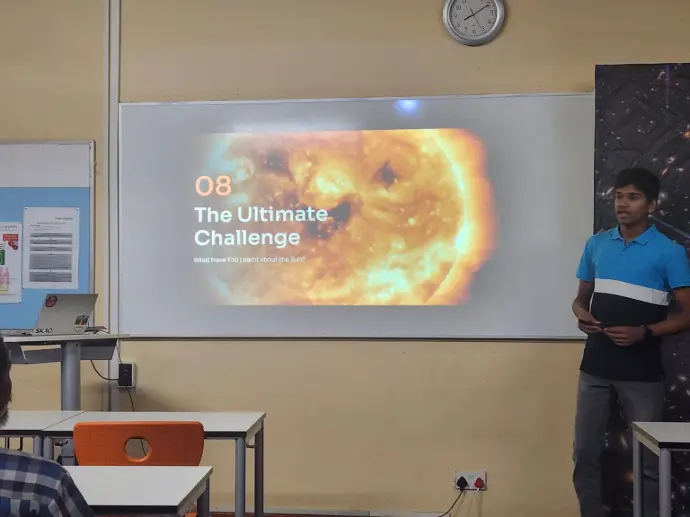
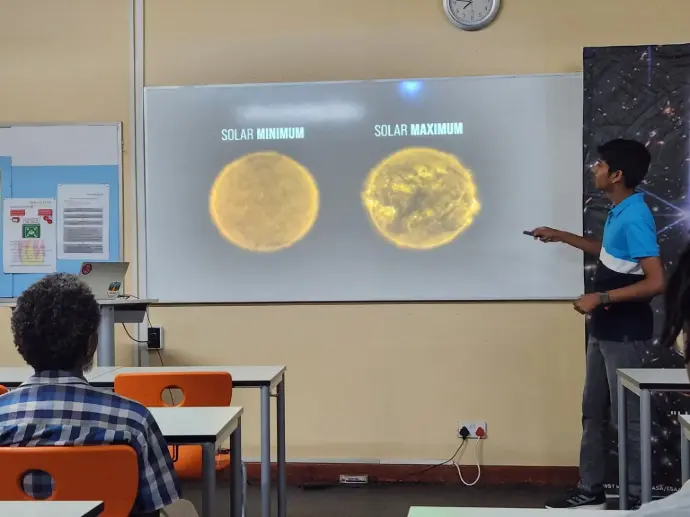
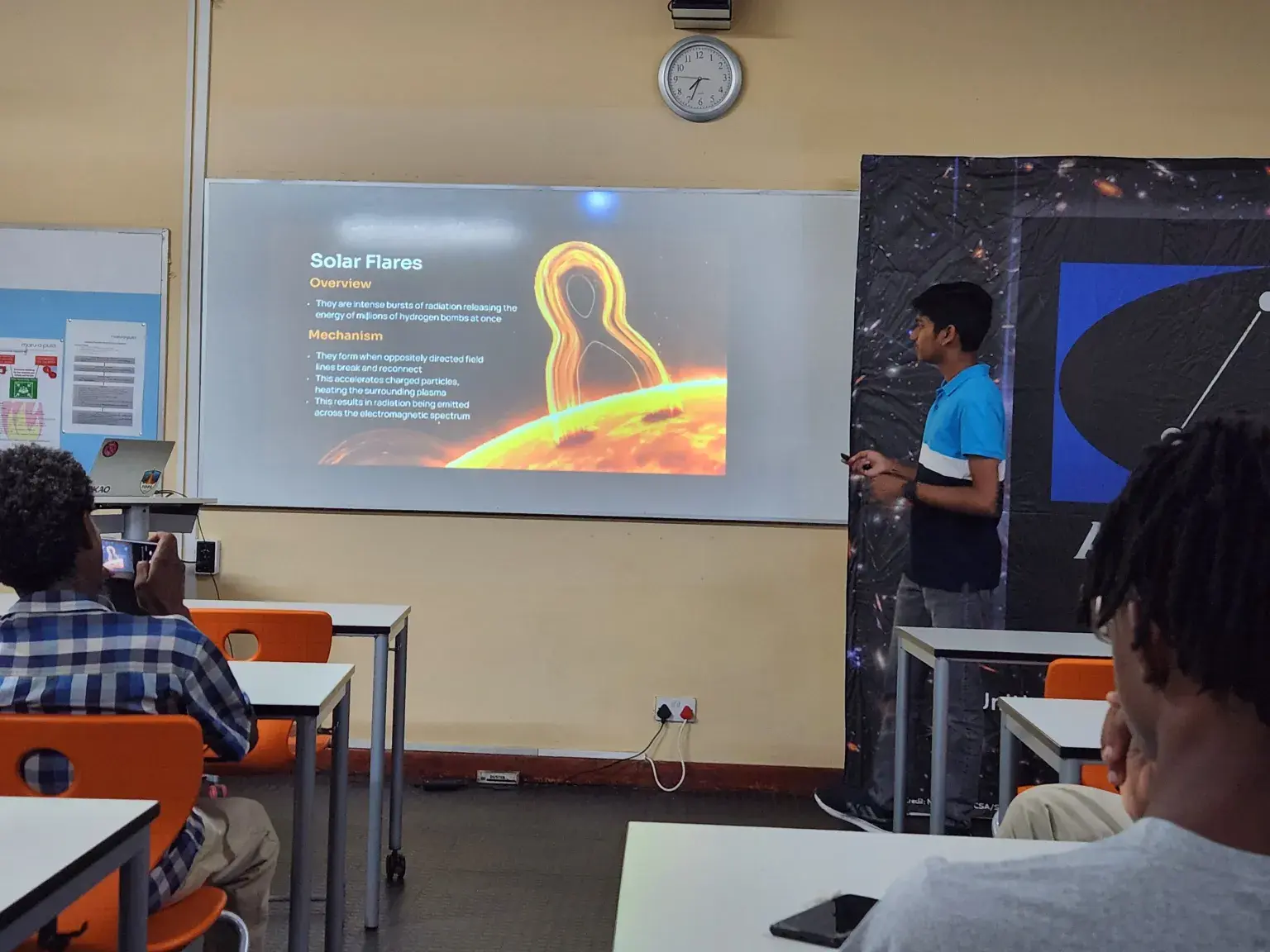
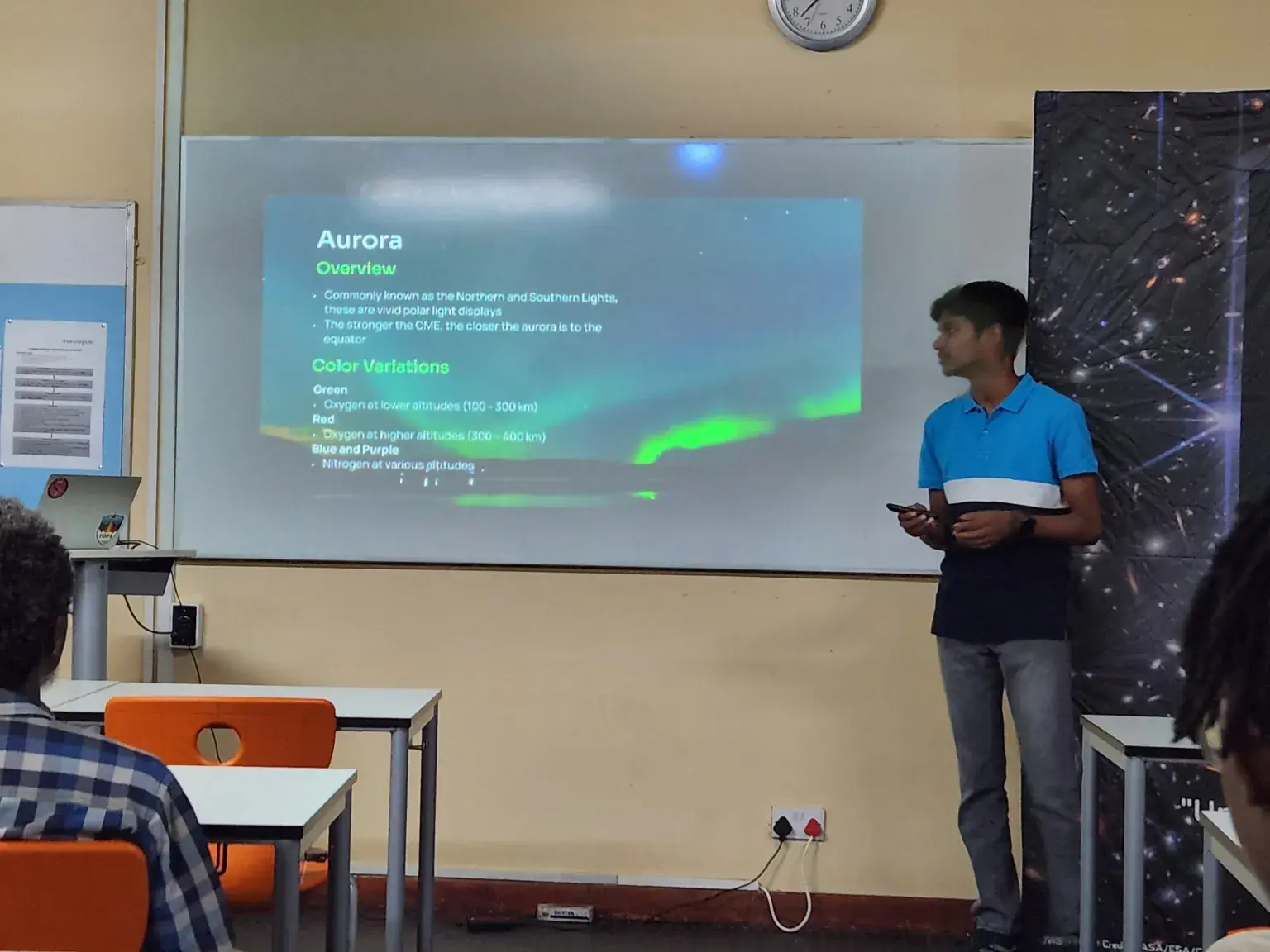
Achal Gupta presentation
- 26 October 2023 at MaP School. Preceded by Harold Hester update on the Skies over Botswana for November 2023
Preceded by Harold Hester's update on the Skies over Botswana for November 2023
Astro-Park
by Dr Kushatha Ntwaetsile
Abstract
This talk introduces the envisaged Astro Park project at BIUST. This project includes a National Optical Observatory that will have a 1-meter optical telescope in a dome that will be used for research and a number of smaller optical telescopes that will be used for outreach. It also includes a 50-seater planetarium. The planetarium
will be a sky theatre simulating the night sky. It will also be used to host educational and entertaining shows about Astronomy.
This talk will also focus on how the project is set to produce benefits for education, research, technology development and tourism, which will contribute greatly to economic diversification, innovation, and the development of a knowledge-based economy in Botswana.
Biography
I am Kushatha Ntwaetsile, a Computer Scientist turned Astronomer. I graduated with an MSc in Computer Science from BIUST in 2018. Before then, I had obtained my undergraduate Degree in Computer Systems Engineering from the University of Sunderland through the Botswana Accountancy College in 2013. Recently, I obtained a PhD in Astrophysics from the University of Hertfordshire-UK.
I have a few years of experience working in academia. Whilst studying for my MSc at BIUST, I also had an opportunity to serve as a graduate teaching assistant at the Department of Academic Literacy for a little over two years.
I also worked as a Lab Demonstrator at the University of Botswana Computer Science Department for one academic year, prior to the commencement of my PhD.
While studying for my PhD in the UK, I worked as an Online Tutor for the University of London, where I supported their BSc Computer Science and MSc Data Science programmes for over 3 years.
Currently, I am working for the SKA/AVN Project in BIUST as a Software and Data Processing Engineer.
Zooming in on the Invisible Universe: The Story of Jodrell Bank Observatory
by Professor Tim O’Brien, University of Manchester, UK
I’m a Professor of Astrophysics in the Department of Physics & Astronomy at The University of Manchester and an Associate Director of Jodrell Bank Centre for Astrophysics.
I am active in research – working mainly on multiwavelength observations and modelling of nova explosions – and undergraduate/ postgraduate teaching.
I also carry out a wide range of public engagement activities including regular appearances in the media and in events at Jodrell Bank Centre for Engagement and elsewhere.
One of my current major public engagement projects is the bluedot festival – a celebration of music, science, technology, and the arts – of which I was a co-founder and to which I contribute science content and curation. I am also active in celebrating the heritage of Jodrell Bank including the construction of a major new gallery (part of the First Light project). I was also a co-author with Teresa Anderson of the proposal leading to Jodrell Bank Observatory being designated a World Heritage Site in 2019.
Away from work, I enjoy (mostly) watching Manchester United and working in our garden in the Peak District, a beautiful part of the world.
The Lovell and Mark 2 radio telescopes at the world-famous Jodrell Bank Observatory in Cheshire, UK
Tim will tell the story of Jodrell Bank’s pioneering role in the worldwide development of radio astronomy. A story which takes us from wartime radar to global networks of radio telescopes. These instruments revealed what was previously unseen and undreamt of, a universe full of exotic objects such as quasars and pulsars. He will conclude with an update on Jodrell’s current e-MERLIN telescope array and the forthcoming Square Kilometre Array....
The Origin of the Universe
by Dr. Piccirillo
Abstract
“I will describe the most remarkable trip that we can imagine: we will go to the edge of time and space. I will discuss what we think today is the origin of space and time and everything you see in space, from planets to galaxies, blackholes, etc."
Biography
Dr. Piccirillo is Professor of Radio Astronomy Technology at the Jodrell Bank Centre for Astrophysics at the University of Manchester (UK). His main research concerns the design, construction and operation of state-of-the-art telescopes to study the radiation emitted by the big bang. He is a horrible piano player and an even worse tennis player, not to mention his historical weakness in chess apertures….
Design of Reflector Antenna systems for radio Astronomy Applications
by Fahmi Mokhupuki
Thursday, 27 April, 2023
6.30PM- 7.30 PM (CAT)
Elucidating the Mysteries of the Universe through Gardening
by Michael Bode
Biography
Mike Bode is Emeritus Professor of Astrophysics and founding Director of the Astrophysics Research Institute at Liverpool John Moores University, and Visiting Professor of Astrophysics at BIUST. His research work focusses on understanding exploding stars and he is a past Vice President and Secretary of the Royal Astronomical Society. He has published over 250 refereed journal papers, including 14 Nature Letters, on his work, together with several books, and led the development of the World’s largest fully robotic telescope, the Liverpool Telescope, based in the Canary Islands. Internationally, he led the development of the first 20-year Roadmap for astronomy in Europe and currently chairs international oversight panels for research institutes in Spain and Thailand. In 2018 he was given an award by the Thai Crown Princess Sirindhorn for his “dedication and contributions to the development of astronomy in Thailand”. Mike has been a frequent visitor to Botswana and is proud to be vice-chair of the ASB. In particular, he is passionate about using astronomy as a hook to get more people, particularly school-age children, interested in science and technology in general
James Webb Space Telescope image of a cluster of galaxies showing the effects of ‘gravitational lensing’ distorting the images of yet more distant galaxies. Our garden at RHS Chelsea illustrated how such an effect could help us to map the presence of Dark Matter in the Universe.
Our ‘Galaxy Garden’ at the Royal Horticultural Society’s show at Tatton, complete with central supermassive black hole!
Zillion Carats Diamonds of the Universe
by Dr. Ceren Ulusoy
Yes, you are not reading the title incorrectly, it sounds very far-fetched, right?
We know that diamonds only exist on ground, but some bright stars in the night sky that you see turn into diamonds with the same chemical composition as those known on Earth; just like in the chorus of that popular song, ‘Shine Bright Like a Diamond in the Sky’!
So how?
This is such a simple but sophisticated explanation if stellar astrophysics is involved.
The objects mentioned above are called white dwarf stars, but also the terms “diamond” and “crystalized spheres” came to use after observing a ZZ Ceti type of pulsating variable star with the Hubble space telescope and WET (Whole Earth Telescope) observing campaigns.
The target observations ultimately confirmed the 1960s theory and found that much of the total stellar mass had crystallized. Moreover, the white dwarfs may also be described as unique forensic laboratories that provide connections between the Milky Way in which we locate, and the history of the universe from beginning to end. Indeed, the structure and composition of white dwarf stars keep records of the final stages of stellar evolution.
This makes them crucial targets to investigate.
Astronomy and Art
by Professor Andy Newsam
Abstract
For centuries science and art went hand-in-hand, but more recently they seem to have diverged into two distinct ‘cultures’. However, they still have much to gain from each other and in this talk Andy will describe some forays by an astronomer into the world of art to try to explore challenging concepts with unsuspecting audiences. From computer music to dance, theatre to sculpture, and exploring science from gravity and the nature of Dark Matter, to the physics of breakfast, we will see some ways in which art and science can work together, and also perhaps ask whether the two cultures are really as different as they might at first seem.
Biography
Andy Newsam is Professor of Astronomy Education and Engagement at Liverpool John Moores University (LJMU). After studying cosmology at Glasgow University, and working as an observational astronomer at the University of Southampton, he joined LJMU in 1998 to help set up the educational arm of the Liverpool Telescope, which later became the National Schools’ Observatory, one of the largest astronomy education projects in the world. As well as astronomical research and education he is a keen science communicator, giving talks to many thousands of schoolchildren, amateur astronomers and the general public throughout the UK and beyond, as well as working with artists of all kinds on new ways – from show gardens to street theatre – to bring the delights of astronomy to as many people as possible.
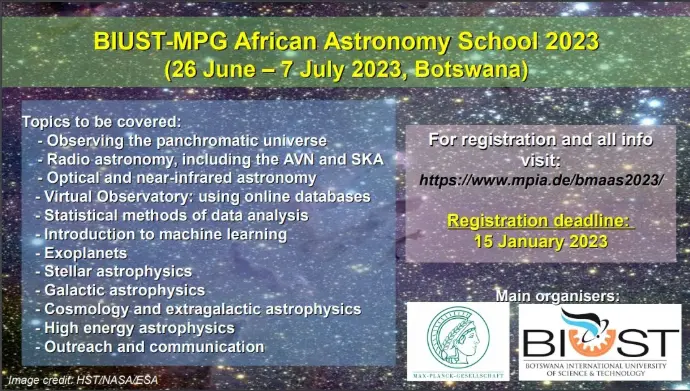
BIUST is pleased to announce the BIUST-MPG African Astronomy School to take place from 26 June to 7 July 2023 at the Botswana International University of Science and Technology (BIUST).
BMAAS 2023 is a two-week residential Astronomy school for around 30 graduate and advanced undergraduate students who are starting on Astronomy research in Africa. The objective is to teach students specific aspects of Astronomy, Astrophysics, and Space Science, with a focus on topical research, future opportunities, and practical skills.
Attendance at the School is via successful application. The School is targeted primarily at Masters and starting PhD students, but promising advanced (Honours) Bachelor students are also very welcome to attend. To be eligible, students must be registered at an African university for a course in Astronomy, (Astro)Physics, or closely related field. Applications, including requests for travel support, can now be submitted via the School’s website:
We would be grateful if you could bring this School to the attention of suitable students, for example by forwarding this information.
We also attach a poster below.
Coryn Bailer-Jones, on behalf of the SOC and LOC
SOC:
Coryn Bailer-Jones (MPIA, Germany) – SOC chair
James Chibueze (North West University, South Africa)
Roberto De Propris (BIUST, Botswana)
Brenda Namumba (Rhodes University, South Africa)
Benard Nsamba (Max Planck Institute for Astrophysics, Germany)
Mirjana Povic (Space Science and Geospatial Institute, Ethiopia and Instituto de Astrofísica de Andalucía, Spain)
Zara Randriamanakoto (SAAO, South Africa and University of Antananarivo, Madagascar)
Prospery Simpemba (Copper Belt University, Zambia)
LOC:
Michael Bode (BIUST, Botswana)
Roberto De Propris (BIUST, Botswana) – LOC chair
Adams Duniya (BIUST, Botswana)
Rhodri Evans (BIUST, Botswana)
Greg Hillhouse (BIUST, Botswana)
Ceren Ulusoy (BIUST, Botswana)
THE SOCIAL NETWORK OF
QUASARS
by Prof. Roberto De Propris
Date & Time:
Nov 24, 2022 6:15 PM (CAT)
Annual General Meeting on 27 October 2022
CHAIRPERSON PRESENTATION AGM 2022
HORIZON SCALE TESTS OF QUANTUM GRAVITY USING THE EVENT HORIZON
by Stuart Marongwe
Abstract
Black holes are the most gravitational extreme objects in nature where not even light can escape gravity's grip. Understanding the properties of spacetime in the strong gravity regime may unlock the mysteries of quantum gravity and reveal the nature of space-time itself. Using very long baseline interferometry it is possible to obtain the lensed radio image of the Super Massive Black Hole horizon.
Seeing the black hole at the centre of our Galaxy with the Africa Millimetre Telescope
by Dr. Rhodri Evans
Abstract
Using very long baseline interferometry, astronomers are able to link together telescopes in different parts of the world to obtain incredible angular resolution of millionths of an arc second.
The Event Horizon Telescope (EHT) is such a network, and this collaboration has recently published the first-ever images of the supermassive blackholes at the centre of Messier 87 and our own Milky Way.
The Africa Millimetre Telescope (AMT) will be the first millimetre-wave telescope on the African continent, and will be an important addition to the EHT network.
The AMT will improve the EHT’s resolution, thus enabling us to better understand these strange but important objects.
The AMT will be located in Namibia, and will see first-light in early 2024.
Analogues for planetary Exploration – From Botswana to Mars…
by Fulvio Franchi
28 July 2022 at 6:30 PM (CAT) over zoom
Abstract
Terrestrial analogues are places on Earth with peculiar chemo-physical characteristics that qualify them as ‘extreme environments’. These places are called planetary analogues because they bear similar characteristics with the harsh environments that we know exist (or existed) on other celestial bodies such as Mars or certain moons of Jupiter. Therefore, they can be used by scientists as stand-ins for the study of conditions outside our planet. They are useful laboratories where to test equipment and new hypotheses before launching a new mission, but they can also teach us more about the data we are receiving from existing probes.
Here we will look at some examples of planetary analogues in Africa (and beyond!), trying to understand what kind of science can be done in these sites and why it is so important to promote this kind of science in Africa.
DARK SKIES & ASTROTOURISM IN BOTSWANA
by Bill Tomlinson
Bill Tomlinson’s presentation is a discussion about dark skies, telescopes and other equipment used in amateur astronomy and astrotourism. The effort required to actually start, develop, and grow an industry based on astronomy as a vehicle for the expansion of the overall tourism sector in Botswana.
Bill Tomlinson was born and raised in Kalamazoo, Michigan in the U.S.A. After receiving a telescope for his 12th birthday, his childhood interest in astronomy became more serious. William left his hometown of Kalamazoo to attend university at MIT in Cambridge Massachusetts, in the fall of 1975, to study mechanical engineering.
Although Bill never pursued astronomy on an academic level, his interest in telescopes and amateur astronomy continued to grow.
Bill Tomlinson is the Director and resident astronomer for Diamonds in the Sky (Pty) Ltd., a 100% citizen owned Botswana company formed in 2016, with his wife, Patricia Tomlinson, as the sole shareholder. It has been involved in hosting outdoor astronomy events at schools, parks, lodges, and other outdoor event venues for the purposes of entertainment, education, and the promotion of astronomy based tourism in Botswana.
Bill is a member of the Astronomical Society of Botswana where he has been a contributing member for the past three years.
Astronomy in Thailand: Experiences of a Batswana student
Zoom Presentation – 28 April 2022 at 6:30 PM (CAT)
With the envisioned development and the construction of a new radio telescope in Botswana as part of the multi-national Square Kilometer Array (SKA) project, Botswana requires a significant increase in human capital in the field of science and engineering. On the quest of realizing Botswana’s involvement in the said project, Botswana International University of Science and Technology (BIUST), which is the host institution of the SKA project in Botswana, has partnered with the National Astronomical Research Institute of Thailand (NARIT) to facilitate research in astronomy and engineering disciplines as well as training of some of the selected students and staff. In 2019, BIUST, sent two of their master’s students (Galefang Mapunda and Abraham) to Chiang Mai, to be placed as Research Assistants for a period of two years with NARIT. The students were to be trained in various astronomical activities and technologies including telescope installation, operations, design, and astronomical observations for both radio and optical telescopes. The first part of the training involved the operations and engineering aspects of the various astronomical instruments available at NARIT including the 2.4 m optical telescope at the Thai National Observatory (TNO) and the ongoing construction & installation of the 40 m Thai National Radio Telescope (TNRO). The second and last part involved astronomical communication and processing of both optical and radio sources & objects. In this talk, Galefang will share both professional and personal experience of living and working in Thailand.
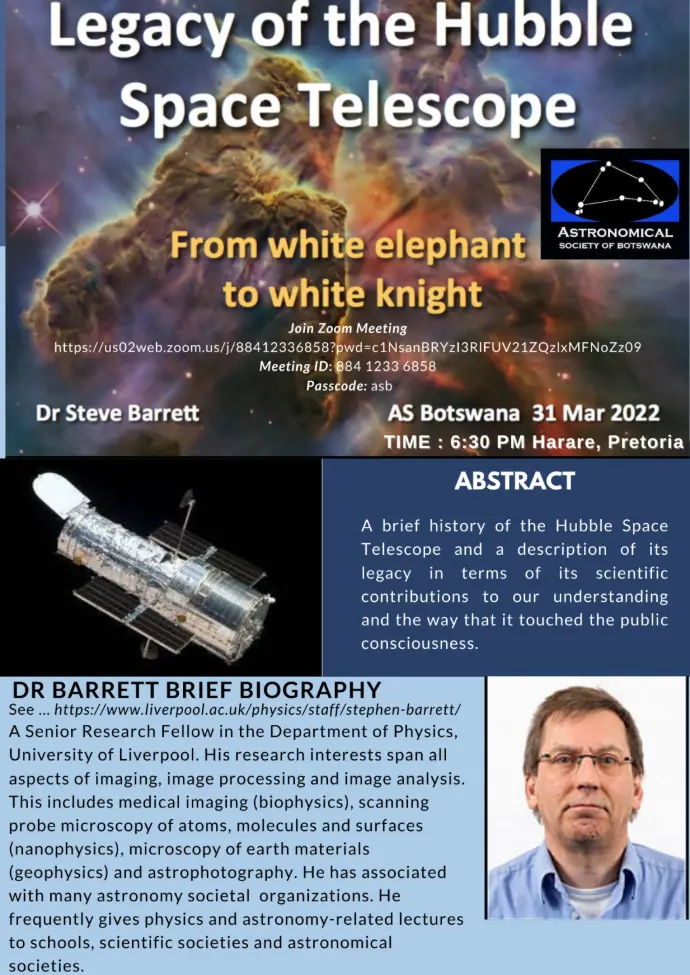
Legacy of the Hubble Space Telescope
by Dr. Steve Barrett, Department of Physics,
University of Liverpool, UK.
31st March 2022 at 6:30 PM (CAT)
STORIES IN THE STARS
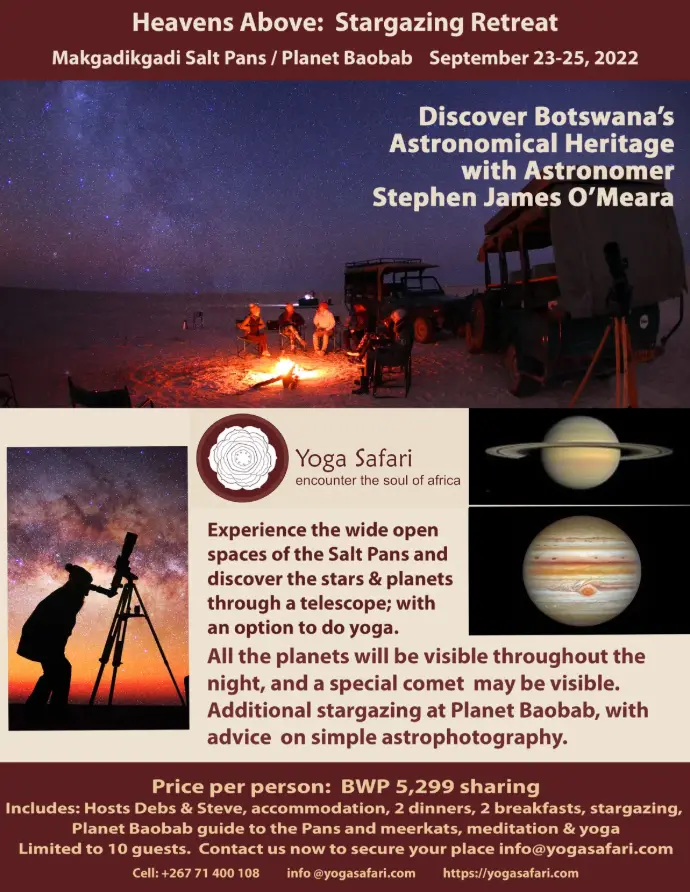
by Stephen O’Meara
Zoom Presentation – 28 April 2022 at 6:30 PM (CAT)
Explore the wonder of the sky and its fascinating phenomena with Stephen O’Meara, one of the world’s leading visual observers.
The talk will be given by eminent Astronomer Stephen O’Meara who lives in Maun, Botswana and recently published a book on the Night Skies of Botswana (details in his Bio here).
Throughout the ages, human beings have developed their own cosmology, or stories, to explain the night sky and its mysterious events. Botswana’s Basarwa have their own stories, handed down through oral tradition.
In this talk Stephen will share some of the more outstanding stories that he is trying to preserve for future generations.
Presentation on Thursday 24th February 2022 at 6:30 PM (CAT)
Astronomy in the Blink of an Eye: Searching for the Fastest Events in the Universe
by Dr. Emily Petroff from University of Amsterdam/McGill University
Most things in the universe happen over millions or even billions of years but some things change on the timescales of human life and can be seen to change in a matter of months, days, or even seconds. These are some of the most extreme events in the universe, things like the collapse of a dying star, or a collision of two massive objects. Humans have been observing astronomical transients for centuries, from supernovae to gamma ray bursts and, most recently, gravitational waves. In 2007, we discovered a brand-new type of transient called fast radio bursts, bright radio pulses that last only a few milliseconds. Their origin is one of the newest unsolved mysteries of astronomy. I will tell the story of their discovery and some of the most exciting new breakthroughs.
Biography
Dr Emily Petroff is an astrophysicist jointly appointed as a Veni Fellow at the University of Amsterdam Anton Pannekoek Institute in the Netherlands and as a manager of the CHIME/FRB Collaboration based at McGill University in Canada. She obtained her bachelor’s degree from Carleton College in Northfield, Minnesota and obtained her PhD from Swinburne University of Technology in Melbourne, Australia in 2016. Previously she has worked in the Netherlands as a postdoctoral researcher first at ASTRON, the Netherlands Institute for Radio Astronomy. Her research has made her a leader in the study of fast radio bursts, mysterious distant radio sources that we are just beginning to understand.
As astronomy became increasingly data driven over the twentieth century and we are entering the era of ‘big’ observational astronomy, automated morphological classifications using machine learning were introduced. In these large surveys, simply curating the data volume becomes a significant challenge and interesting scientific question in its own right. Machine learning is becoming an important statistical tool for astronomers seeking to efficiently analyse and derive meaning from massive data sets, with ‘unsupervised’ methods in particular showing promise in various applications, particularly in automatic classification. In this work we contribute to the effort of seeking more efficient means of automatically classifying and mining large imaging data sets in the radio using ‘Haralick’ features, which provide a compact representation of image texture.
Biography
Kushatha Ntwaetsile is a former computer scientist turned astronomer. She is studying for a PhD in Astrophysics at the University of Hertfordshire-UK, using Machine Learning to automatically classify new & unseen galaxies. She graduated with an MSc in Computer Science from Botswana International University of Science and Technology.
"Astro-Ecology": using Astrophysics research techniques to help tackle challenges facing the planet
by Professor Steve Longmore, Astrophysics Research Institute, Liverpool John Moores University, UK
Abstract
He will describe how his group are using Astrophysics research techniques to help Ecologists protect the ecosystems, save critically endangered animal species, and stop peat forest fires that are a major contributor to climate change.
Building on technological and software innovations in Astronomy, their “Astro-Ecology” team have developed a drone plus thermal infrared imaging systems and an associated automated detection and identification pipeline that provides a cost-effective and efficient way to automatically detect animals and peat fires. He will describe the current status of the system and their efforts to enable local communities to run routine monitoring and management of animal populations and peat fires over large and inhospitable areas, and thereby tackle global biodiversity loss and climate change.
Astronomy and Astrotourism
for development: the Namibian
Example
by Dr. Hannah Dalgleish
Date: Thursday August 26, 2021
Time: 6.30PM- 7.30 PM, Botswana Time
Abstract
Astronomy for development is making great strides in Namibia. Forged by a collaboration between the Universities of Oxford and Namibia, together we are using astronomy as a means for capacity building and to benefit Namibia socioeconomically. Namibia is already recognised as a world leader in sustainable tourism; astronomy offers great potential to expand and
diversify the market with minimal environmental impact. With access to some of the darkest and driest skies on the
planet – a completely free resource – astrotourism is a relatively easy way for tour guides to complement their earnings.
It also presents an opportunity to preserve the indigenous stories about the stars, which are already being lost. With H.E.S.S. already in place and the Africa Millimetre Telescope on the horizon, astronomy education provides further
opportunities for sustainable socioeconomic growth. Led by Radboud University, we are developing a Social Impact Plan in the hope to inspire future generations of Namibian scientists and engineers.
Biography
Dr Hannah Dalgleish is a researcher and
communicator, working at the intersection between
astronomy and society. An astrophysicist by training,
she now spends her time focused on capacitybuilding projects, and on furthering our
understanding of how astronomy affects the lives of
people around the world.
Hannah is currently working between the University
of Oxford (UK) and the University of Namibia. She is
a postdoctoral researcher in astronomy for
development, and is involved in numerous projects
related to dark sky tourism and light pollution,
astronomy education, science communication, and
more.
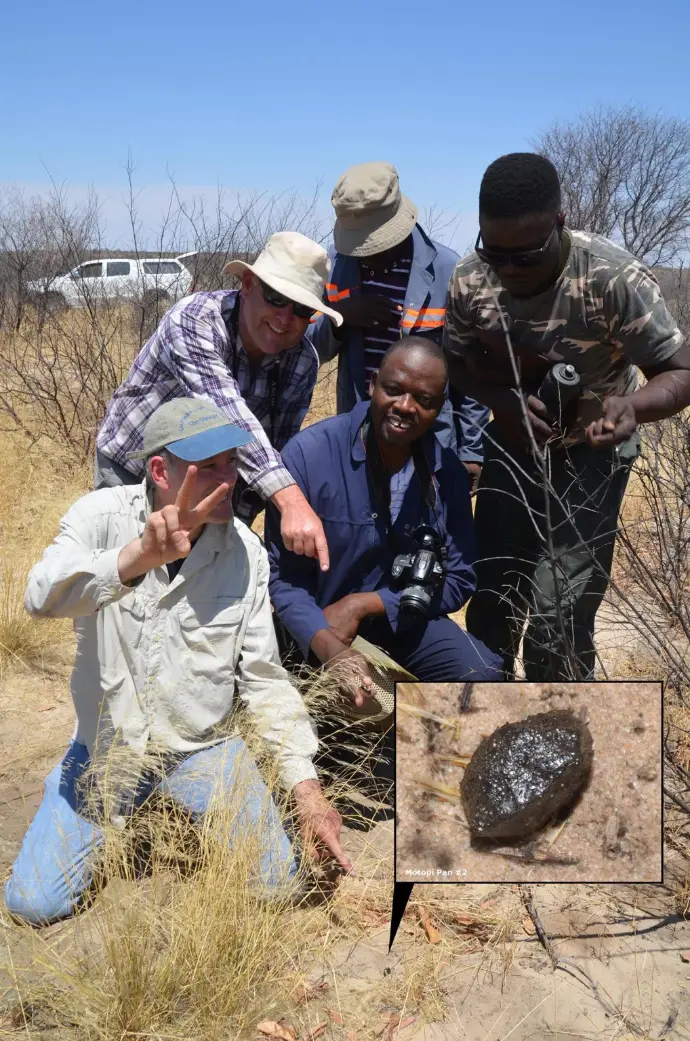
"Tracing Motopi Pan meteorite to its source in the Asteroid Belt''
- Peter Jenniskens, a Meteor Astronomer with the SETI Institute and NASA Ames Research Center in Silicon Valley,
- California & Roger Gibson, Professor of Structural Geology and Metamorphic Petrology in the School of Geosciences at the University of the Witwatersrand, Johannesburg
Andrew Newsam, Professor of Astronomy Education and Engagement at Liverpool John Moores University (LJMU) and Head of the UK National Schools' Observatory (NSO) and its Astronomy education accessible to all student in UK & Globally- on 29th April 2021 at 6:30 pm (CAT).
ASB Presentations are held the last Thursday of every month, over Zoom from 6:30 pm until 7:30 pm (unless otherwise stated). These Presentations are open to all society members and their guests and the public at no cost.
Following these Presentations, the ASB committee meets monthly.
Write Geraldine & Harold Hester’s Talk 25 March 2021
– an excellent, informative event
The National Astronomical Research Institute of Thailand (Narit)
by Dr. Saran Poshyachinda
– 25 February 2021 at 3:30 pm
Anatomy of Black holes Live Presentation
by Dr. Moletlanyi Tshipha
– 25 February 2021 at 3:30 pm
MARS- Mokolodi Astronomers Reaching for the Stars
– 24 July 2020
On the 24th of July, ASB committee members gathered at Mokolodi Nature Reserve to officially open the new astronomical viewing platform (named MARS – Mokolodi Astronomers Reaching for the Stars), a joint project funded by ASB and Mokolodi, and to unveil a commemorative plaque in honour of the Barrow family of Scotland and the Southport Astronomical Society of the U.K. for their donation of a Celestron 127 SLT Maksutov Cassegrain telescope to the Society. The plaque was donated by Mr. and Mrs. Harold Hester, and Professor Mike Bode, both members of the ASB
Meteorite Landing in Botswana -24 July 2020
– 24 July 2020
On the 24th of July, at 18:30, at the request of the Astronomical Society of Botswana, Dr. Fulvio Franchi from BUIST, gave a presentation via ZOOM about the tracking of a meteorite that landed in Botswana in 2018, and how they eventually recovered several pieces of it in the CKGR after many expeditions looking for it. The fragments are still being tested.
NEUTRON STARS LIVE PRESENTATION
– 27 AUGUST 2020
On the 27th of August, from 18:00 until 20:00, Dr. Jacobus Diener from BIUST will be conducted a live presentation via ZOOM, at the request of the Astronomical Society of Botswana, about neutron stars.
GEOLOGY OF MARS LIVE PRESENTATION
– 24 SEPTEMBER 2020
Another webinar invitation from ASB, this time the presentation will be held by Prof Motsoptse Modisi , an Associate Professor at the University of Botswana(UB) .Yet another opportunity for everyone to join in, despite your geographical location.
Date: Thursday 24th September 2020
Time: 6pm – 7.30pm
SKA WEBINAR-BUILDING AN OBSERVATORY TO STUDY THE DAWN OF TIME AND THE ORIGINS OF LIFE
– 8 OCTOBER 2020
Professor Phil Diamond will describe the plans to expand the telescopes across Australia and southern Africa, including Botswana, to dramatically increase the capabilities of the SKA Observatory.